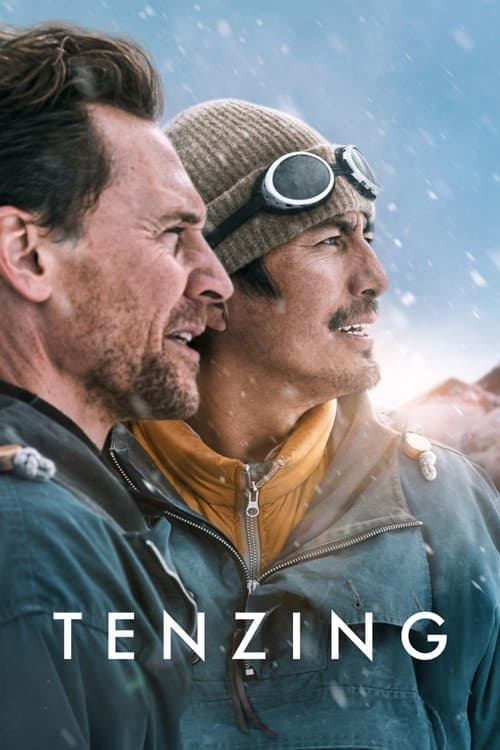
Tenzing tells the story of the 1953 Everest summit through both Edmund Hillary and his climbing partner Tenzing, and it's clear from the title which of the two the film is really interested in. We watched it the week it landed on Apple TV+, and we came away agreeing on more than our half-star gap in scores suggests.
The production earned our trust
Jennifer Peedom, who directed it, comes almost entirely from documentary work, including a well-regarded 2015 film called Sherpa, and this is reportedly her first narrative feature. It shows in the best way. Matt was relieved the production actually went to Nepal instead of faking it, and both of us were struck by how closely the gear, tents, and outfits matched old expedition photos. Some of the mountaineering was shot in New Zealand rather than on Everest itself, but the blend was convincing enough that Jeff caught himself wondering whether the crew really sent people up a mountain in period equipment to get certain shots.
Jeff also loved what the film captured about that era of expeditionary adventure generally, the same spirit behind Shackleton and the Endurance: men going after something enormous with primitive gear and no real safety net. It's a useful contrast to modern Everest climbing, where guided clients get Sherpas carrying their gear and, by one account Jeff came across, hot towels waiting at base camp.
Too much childhood, not enough climbing
Here's where we agreed almost completely. Matt described the structure as jumping back and forth through Tenzing's childhood and young adulthood so often that he lost track of where he was in the timeline, and said he would rather have seen more of the actual expeditions Tenzing had already been part of before this one. Jeff landed in the same place: he loved the human-achievement story but didn't feel pulled in by a late scene where an exhausted, hypoxic Tenzing has a vision of his late wife near the summit. Both of us pushed back on the film's suggestion that Tenzing's drive was mainly about family. We'd guess it was closer to a personal, almost spiritual pull toward the mountain itself, something earned over a career of expeditions the film barely shows.
Matt put it well: if you're making a biopic about an elite athlete, the appeal is usually in the training and the buildup, not in relitigating every emotional beat of their childhood.
Where we landed
What the film does get right, we both loved: the discrimination Tenzing faced for not technically belonging to the Sherpa community, and the warmth between him and Hillary. Matt went digging afterward and found that Hillary's supportive, unresentful friendliness toward Tenzing holds up historically. He also flagged that Pasang, a Sherpa shown in friction with Tenzing, looks like a composite character, and cautioned against treating that portrayal as a record of a real person.
Jeff gave it a four out of five, calling it about as good as a Friday-night watch gets. Matt landed at three and a half, docking it for the structure but still recommending it, especially if you already know the two names going in.